
When your heating stops responding, the thermostat is often the first thing to blame. We get plenty of calls from homeowners across Southampton who think their boiler has failed, when actually it turns out to be a simple control issue. Before you start worrying about Southampton boiler repairs, it’s worth checking a few common thermostat faults.
This guide walks you through practical thermostat troubleshooting steps you can try at home. Some fixes are quick and free. Others are a sign you need a local heating engineer to have a proper look. Either way, understanding what’s going on puts you back in control.
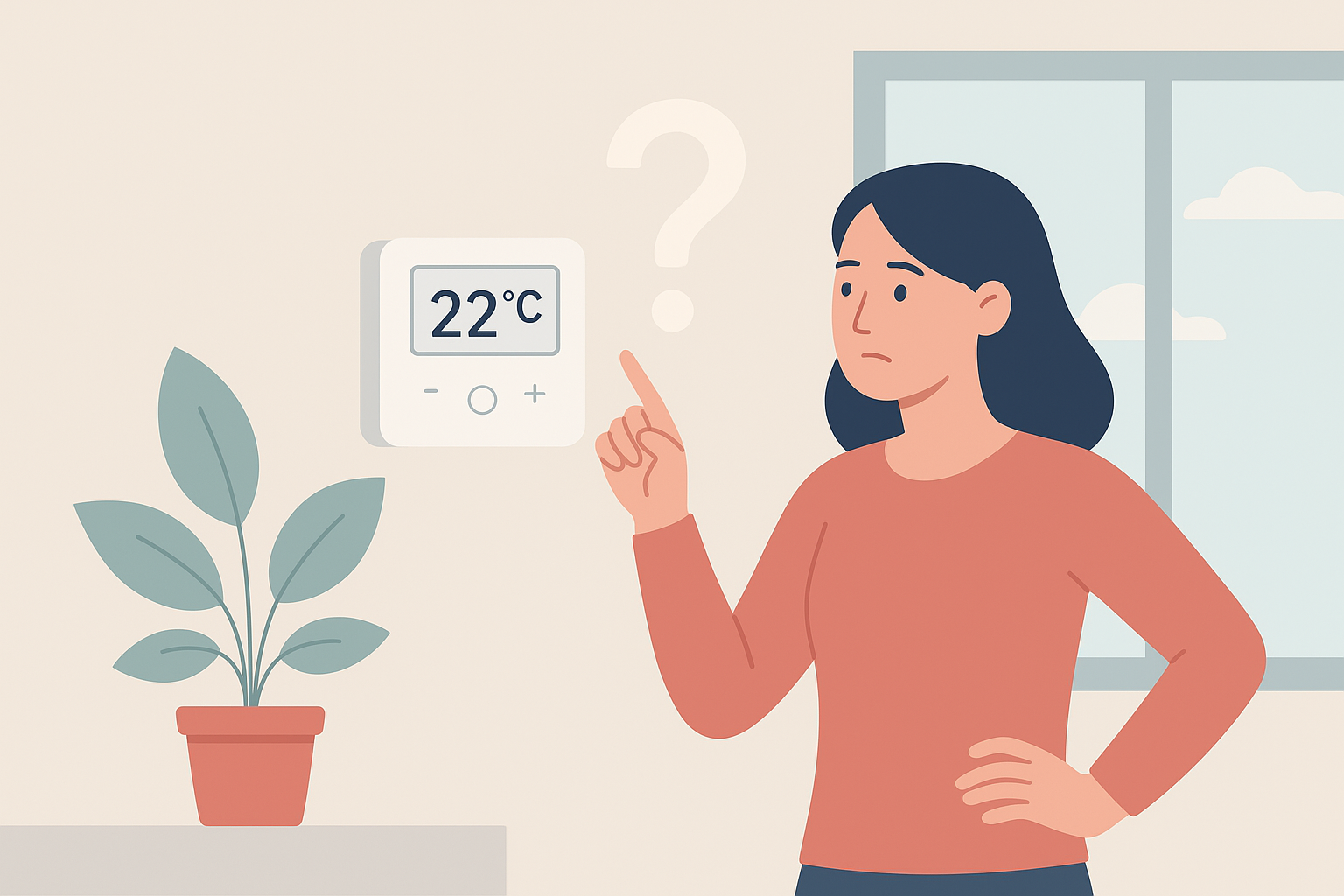
Common Thermostat Problems
Heating controls are simple devices, but they rely on accurate temperature readings and clear signals to your boiler. If something disrupts that, your heating won’t behave as it should.
Here are the most common issues we see in homes around Southampton, Romsey and Hedge End:
- Heating not coming on at all
- Radiators staying on and overheating rooms
- Temperature not matching the setting
- Boiler firing up randomly
- No display on the thermostat
Sometimes the problem is obvious, like a blank screen. Other times it’s more subtle. A customer in Hedge End recently mentioned their hallway felt freezing even though the thermostat was set to 21°C. In that case, the thermostat had been fitted near a draughty front door, so it never reached the set temperature and kept the heating running.
Before assuming the worst, check where your thermostat is located. It should be in a central area, away from radiators, direct sunlight, kitchens and external doors. Poor placement alone can cause ongoing heating control headaches.
Batteries and Settings
It sounds basic, but flat batteries are one of the biggest causes of thermostat failure.
Check the batteries first
If your display is blank or unresponsive:
- Remove the front cover carefully
- Replace with fresh, good-quality batteries
- Make sure they’re fitted the right way round
- Reset the thermostat if needed
We’ve visited properties in Romsey where everything sprang back to life after two new AA batteries. It’s always worth trying before booking an engineer.
Check the programme and mode
Modern thermostats and programmers allow different schedules for weekdays and weekends. It’s easy for settings to get knocked accidentally, especially after a power cut.
Go through these steps:
- Ensure it’s set to “heating” and not “off” or “summer mode”
- Check the current time and date are correct
- Review programmed temperatures
- Look for holiday mode
After power outages in parts of Southampton, we often find timers flashing 00:00. When the clock resets, heating schedules can shift without you realising.
If you’re unsure how heating controls are meant to operate efficiently, the Energy Saving Trust has a clear explanation here: heating controls advice.
Smart Thermostat Issues
Smart thermostats are brilliant when they work properly. When they don’t, they can be more frustrating than traditional controls.
Common smart thermostat problems include:
- WiFi disconnecting
- App not responding
- Receiver unit not communicating with the boiler
- Delayed heating response
Check the WiFi connection
If the app says your heating is offline, check your broadband first. Routers reboot after updates or power cuts, and smart thermostats don’t always reconnect automatically.
Try restarting:
- Your router
- The thermostat
- The receiver unit near the boiler
In a few Southampton installations, we’ve seen signal issues where thick internal walls affected the connection between thermostat and receiver. Relocating the receiver slightly solved it without replacing anything.
Check the receiver unit
Near your boiler, you’ll usually find a small box with lights indicating communication status. If there are no lights or an error indicator, there may be a power or wiring issue.
This is where thermostat troubleshooting should stop and a qualified engineer should take over. Removing covers or interfering with wiring around the boiler is not a DIY job.
Wiring Faults
If batteries and settings aren’t the issue, wiring faults may be the cause.
In older properties across Romsey and parts of Southampton, we still see ageing wired room thermostats connected directly to the boiler or a wiring centre. Over time:
- Connections can loosen
- Terminals can corrode
- Cables can degrade
- Previous DIY alterations can cause faults
A typical example is when central heating works intermittently. You might hear the boiler try to fire, then stop. Or the heating may only come on when you tap the thermostat. That’s usually a sign of a poor electrical connection.
Wiring checks involve:
- Testing voltage signals
- Inspecting the wiring centre
- Checking the link between programmer, thermostat and boiler
- Verifying the boiler is receiving a proper call for heat
This level of thermostat troubleshooting definitely needs a Gas Safe registered engineer or qualified heating specialist. Incorrect wiring can damage your boiler’s PCB, which is a much more expensive fix.
If you’re already due a routine service, it can make sense to have controls checked at the same time. Many local homeowners combine this with an annual service keep everything running reliably.
When to Replace Controls
Sometimes replacement is more sensible than repair.
Older mechanical dial thermostats, especially those over 15 years old, can lose accuracy. If your home always feels too hot or too cold despite adjustments, the thermostat may simply be worn out.
Signs it may be time to upgrade:
- Frequent battery or display problems
- Inconsistent temperature control
- Heating cutting in and out randomly
- No programmable schedules
- Controls incompatible with a newer boiler
Upgrading to a modern programmable or smart thermostat gives you tighter temperature control and often reduces energy bills. Especially in family homes across Hedge End, where heating is on morning and evening, better scheduling makes a noticeable difference.
If you’ve recently had or are considering a new boiler installation, it’s worth pairing it with updated controls. Modern systems installed through boiler installation in Southampton typically work best with compatible smart or load-compensating thermostats.
We always advise homeowners not to keep throwing money at outdated controls. Sometimes a clean replacement provides better comfort and reliability than ongoing small repairs.
Don’t Ignore Early Warning Signs
If your heating is behaving oddly, don’t wait until it stops altogether. Small control issues can strain your boiler, especially if it’s constantly switching on and off.
Short cycling, incorrect temperature readings and wiring faults can all affect system efficiency. The sooner you deal with it, the less likely you are to face a no-heat emergency in the middle of winter.
Across Southampton and surrounding areas, we see a spike in heating control failures as soon as the weather turns cold. Controls that haven’t been used for months suddenly get pushed harder, and weaknesses show up fast.
Final Thoughts
Thermostat issues are common and often fixable with a few simple checks. Start with batteries, settings and WiFi connections. If the problem goes deeper into wiring or communication with the boiler, it’s best to bring in a qualified engineer.
If you’re unsure or want peace of mind that your full heating system is operating properly, the team at LW Gas regularly help homeowners across Southampton, Romsey and Hedge End diagnose and resolve control issues properly rather than guessing.
Book a heating system check and get your heating controls working exactly as they should.